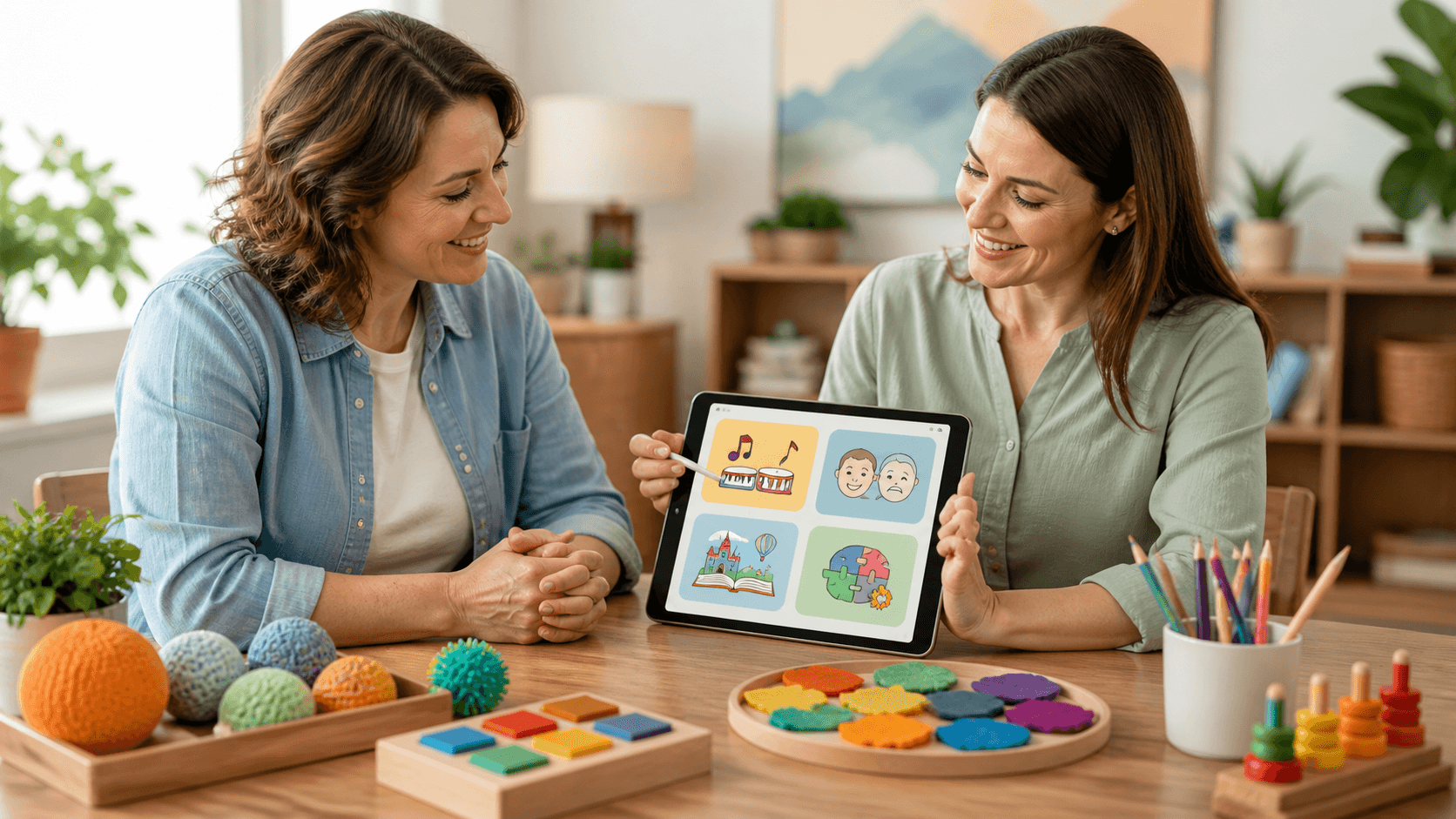
Educational screen time can do more than teach letters and numbers. As fall brings more indoor afternoons, October is a good time for us to revisit the routines that shape what children watch, hear, and explore before the holiday season gets busy.
At Altys, we believe the best child development apps support the whole child. Along with early academic skills, children need room to practice talking, making choices, naming feelings, trying ideas, and feeling proud of what they can do.
Make Screen Time a Safe Place to Grow
A learning app should never feel like a stack of digital worksheets or a stream of passive videos. Children learn best when they can respond, wonder, sing along, and take part in what happens next. That kind of active play can turn a few minutes on a screen into a meaningful moment of growth.
Safety matters just as much as the activity itself. Parents deserve clear control over what their child can explore, especially when AI is involved. A protected digital space helps remove the worry of unpredictable recommendations and content that does not fit a child's age.
With Altys, we turn children's interests into personalized adventures through interactive stories, songs, and age-appropriate activities. Parents can guide learning topics, block unwanted content, and remain part of the experience instead of being left outside it.
Build Skills Beyond Early Academics
Before children are ready to read books on their own or solve bigger math problems, they are building skills that help them learn in every setting. Listening closely, following simple directions, waiting for a turn, and explaining an idea all matter at preschool, kindergarten, home, and playtime.
Interactive stories and songs give us a natural way to practice language without making it feel like a test. A story about an animal, a favorite vehicle, or a crisp fall day can introduce new words while giving children a reason to talk about what they notice.
We can invite children to:
- Describe what they see in a picture or story scene
- Guess what a character may do next
- Repeat a rhyme, sound, or new word
- Choose between two ideas and explain their choice
Personalized learning also respects the fact that children grow at different speeds. One child may be eager to practice new words, while another may be more interested in taking turns or exploring a familiar topic again and again. We can meet children where they are and offer activities that feel possible, playful, and encouraging.
The goal is not to rush childhood. When learning feels warm and achievable, children can build confidence right alongside their ABCs and 123s.
Grow Emotional Skills Through Play
Big feelings are part of being little. Children are still learning what nervous, frustrated, disappointed, excited, and proud feel like in their bodies. They also need simple, safe ways to understand that other people may feel differently than they do.
Thoughtfully designed child development apps can support those early social and emotional skills through stories. When a character feels unsure about joining a game or gets upset by a hard task, we can pause and ask gentle questions: What might the character be feeling? What could help? What would you do?
Those conversations can be especially helpful because the child is talking about a character first, not being put on the spot. From there, parents can connect the idea to real life in a calm, low-pressure way.
Songs and repeated routines can help, too. A familiar song about taking a breath, moving your body, or choosing a calming activity gives children language they can remember when feelings get big. Our role is to provide age-appropriate prompts that parents can build on, not replace a parent's guidance. The most meaningful conversations often continue after the screen is off.
Turn Curiosity Into Creative Problem Solving
Children are natural question-askers. They want to know why leaves change, where animals sleep, how machines work, and what might happen if they try something a different way. Learning experiences should protect that sense of wonder instead of making every activity about finding one correct answer.
A child who loves dinosaurs may enjoy a story challenge about where different creatures live. Another child may connect more with a song about beats, sounds, or patterns. By following a child's interests, we can make learning feel personal and invite them to stay curious.
Open-ended prompts are especially useful because there is no pressure to get everything right. Questions like these encourage flexible thinking:
- What would you build for a rainy day?
- How could this character solve the problem?
- What else could happen at the end of the story?
- Which two things are alike, and which are different?
Digital learning can also lead naturally into offline play. After an interactive story, you might draw a new ending together, act out a favorite scene, build something related to the story, or look for real-world examples on a nature walk. These small follow-up moments help children connect ideas from the screen to the world around them.
Create Calmer Parent-Guided Routines
Even educational screen time needs boundaries. We recommend making learning apps part of a simple, predictable routine, such as a short activity after preschool, a quiet-time story, or a guided session before dinner. When children know what to expect, screen time can feel less like a battle and more like a familiar part of the day.
October offers plenty of gentle themes for a cozy routine: changing weather, harvests, community helpers, nighttime skies, and seasonal songs. Parents can use progress insights to notice what interests a child, where extra encouragement may help, and which new skills are starting to appear. These tools should support family conversations, not make children feel compared or measured.
When choosing child development apps, look past flashy features. A safer choice is one that matches your child's developmental stage, invites active participation, gives you control over content, and keeps you involved. Meaningful screen time is not about adding more technology. It is about choosing experiences that help children feel curious, capable, and safe.
Help Your Child Explore AI Safely
At Altys, we believe children deserve AI experiences that support learning while respecting their need for safety and guidance. Discover how our child development apps approach content protection, parent controls, and age-appropriate exploration. We are here to help you choose tools that encourage thoughtful learning with confidence.